


One of the most challenging parts of being on a product team is making the correct assumptions. Often we are given an expectation from higher ups to create a certain feature or a product that may or may not be something our customers actually want. Without any sort of access to users or customers, it can sometimes feel isolating and daunting to be on a product team trying to create things from seemingly thin air.

What is a Persona?
Before we even start planning to build the product or feature, we can create user personas. Creating personas is an exercise in trying to step into your user’s shoes. By creating a persona, we create a model of a user that helps us relate to them more and understand their needs. Using personas helps us grasp a sense of what the customer might like and how they might use our product or feature in the future.
For example, your team may be given the assignment of creating a feature that helps customers pick up their grocery deliveries at the store. Who you design this feature for will greatly affect how it works, how it feels, how it looks. You may want to create a persona named Grace, a 45 year old stay-at-home mom who often makes her grocery runs before noon after dropping her teenagers off at school. She might be a frequent driver and a frequent online shopper who values finding quality goods for her kids at the cost of her own time investment. Keeping your potential customer at the forefront of your design can greatly improve your products and make them feel more catered to customer needs, increasing loyalty and brand reputation.
How do you begin making personas?
Well, before we begin creating personas, there’s something important to consider. Personas can sometimes be created erroneously based on the same faulty assumptions we’ve made as a hypothesis. The best way to get around this is to make more personas, test your assumptions frequently, and to go back to the drawing board with your newfound knowledge.
When creating personas, it’s really helpful to get detailed and to try to get to know your model customer on more than just a surface level.
Just like real humans, personas should be complex and tell an interesting story of a person's life.
Try to understand not just their basic surface traits but also the forces of what drives them, the details of their day, the real reasons why they would consider your tool. Steer away from stereotypes of users and always try to look for the problem beneath the problem. Bad personas are often stereotypes of users and are based on your own assumptions of the user group, not observations of the real person behind the persona.
What makes a good persona?
Consider these examples as a persona for an app you’re trying to make that delivers pet food to your customers. An example of an ok persona would be:
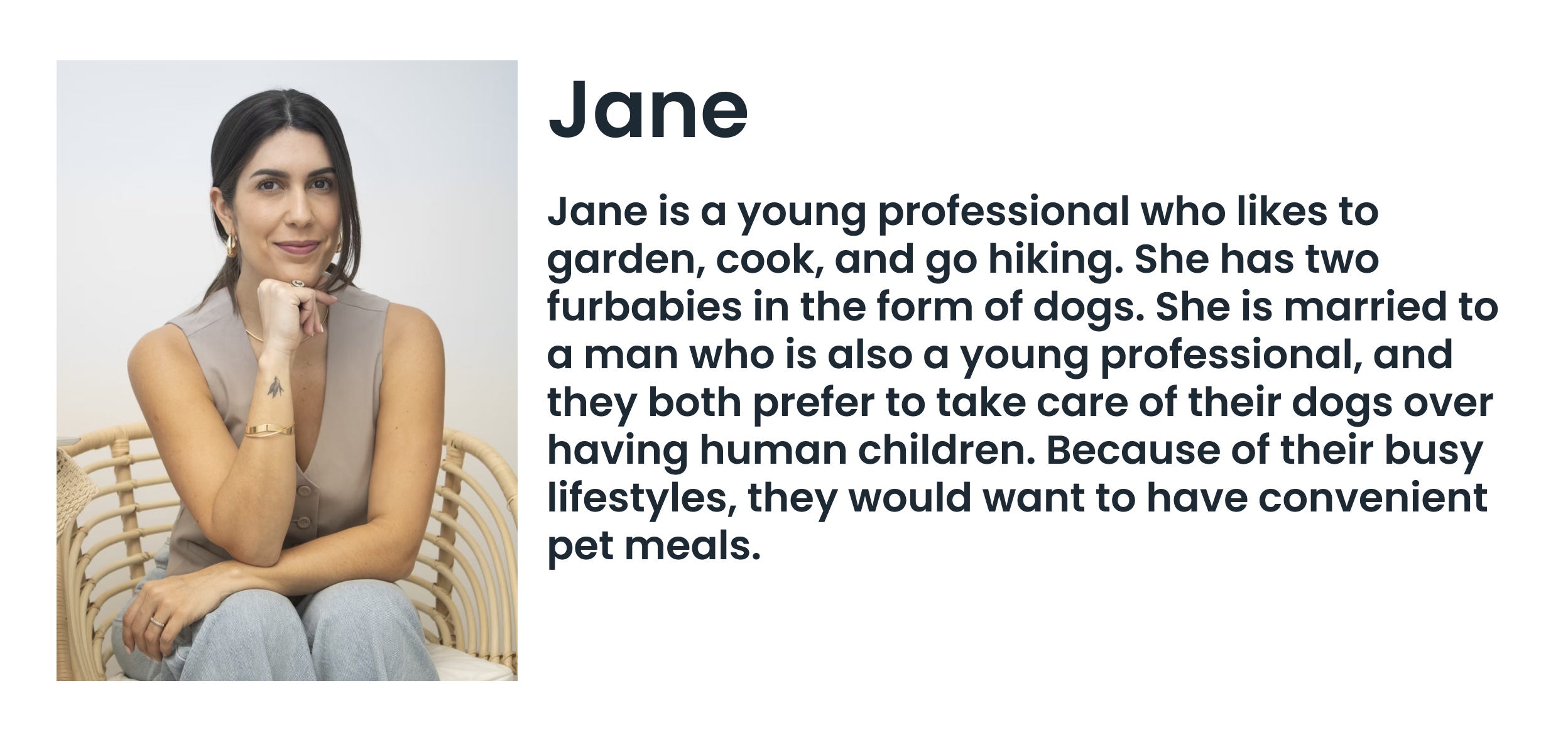
Sure, this persona above gets you a general sense of a customer, but you can flesh out the persona to feel more realistic. An example of a better, more thoughtful persona would be:
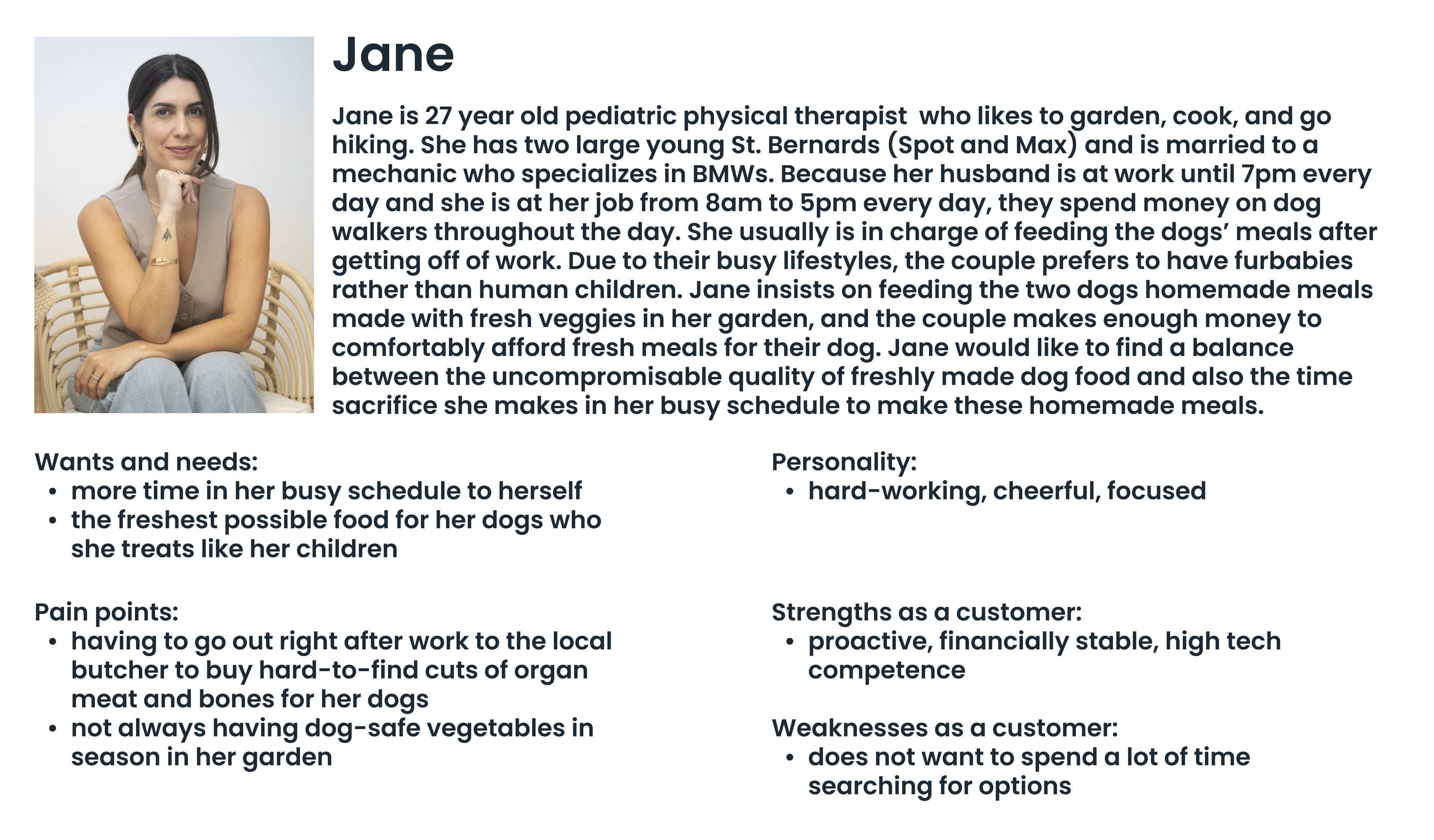
Just like real humans, personas should be complex and tell an interesting story of a person’s life. By really thinking things through and having multiple potential customer personas, you can really start using them to understand the motivations behind your potential customers and test your products and features. What kind of aesthetic would Jane appreciate? How complex of an app would Jane be willing to use? How would we distribute Jane’s precious time investment across the app?
You should do as much research as you can on your users through interviews (if you have them) and gathering demographic information. From there, do some reorganization to help yourself identify your key customers and create at least three core personas that really reflect your user group. Crafting the persona takes care and empathy, so always keep your users at the forefront of your imagination.

To better help you and your team picture your personas, you can then add all your information into a template with a name and a basic bio. Try to make your persona as realistic as possible based on your research. Continuing to validate and iterate upon your personas is the key to getting more accurate.
Personas in action
Having personas created helps steer conversations and start new ones that you and your team may not have considered before.
Keeping your potential customer at the forefront of your design can greatly improve your products and make them feel more catered to customer needs.
Creating thoughtful personas well can take a lot of time. At fuguUX, we have some realistic personas right out of the gate that you can use to test your products. Based on decades of UX research and created by champions of the HCI field, we build our personas with complex AI in order to give you a simple-to-use tool. We give you suggestions for what types of tasks your users may want to conduct on your website based on analysis of your competitors. From there, you can test personas however many times your heart desires!
Don’t just make your assumptions from thin air. Creating and using personas can bring you a step closer to a solid product!